
Whole Family / Holy Week
Build a tradition of discipleship this Easter

(PASSOVER WORKSHEET ATTACHED AT THE BOTTOM OF THE ARTICLE)
Deuteronomy tells us to fix God’s words in our hearts and minds, to teach them to our children when we sit at home and when we walk along the road, when we lie down and when we get up. The command is clear: if we want our faith to outlast us, it has to be woven into the fabric of daily life.
But life is busy. I care a lot, but follow-through is hard. That’s where the calendar can save you. Holidays and seasons that are already on the schedule can become natural opportunities to disciple our kids without adding more to the pile.
The structure is already there; we just have to work to fill it with meaning.
Holy Week is a great place to start.
For one week every spring, the Christian calendar hands us a ready-made structure for teaching our children the most important story ever told: Palm Sunday through Easter, each day building on the one before. If we’re intentional about it, our kids don’t just hear about these events once a year in a church service. They live through them with us.
Here’s how our family walks through Holy Week together.
Palm Sunday
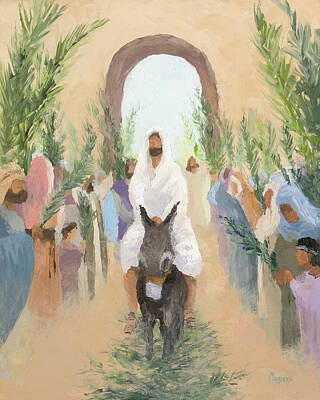
We start where the story starts: with Jesus entering Jerusalem.
On Palm Sunday morning, we go to church as a family. Our little ones scream “Hosanna!” with the rest of the congregation, waving whatever they can get their hands on. They doesn’t fully understand what they are doing yet, but that’s okay. They are participating in something bigger than themselves, and year after year, we will fill in the meaning.
After church, we talk about what Palm Sunday means. The crowds welcomed Jesus as a king. They expected him to overthrow Rome and restore Israel to glory. But Jesus knew something they didn’t: he was riding into the city where he would die.
And he came in riding on a donkey, not a war horse. His kingdom was going to look very different. It was going to be one focused on loving your neighbor and sacrificing for others. That was the thing that was going to turn the world upside down.
Tuesday: The Temple
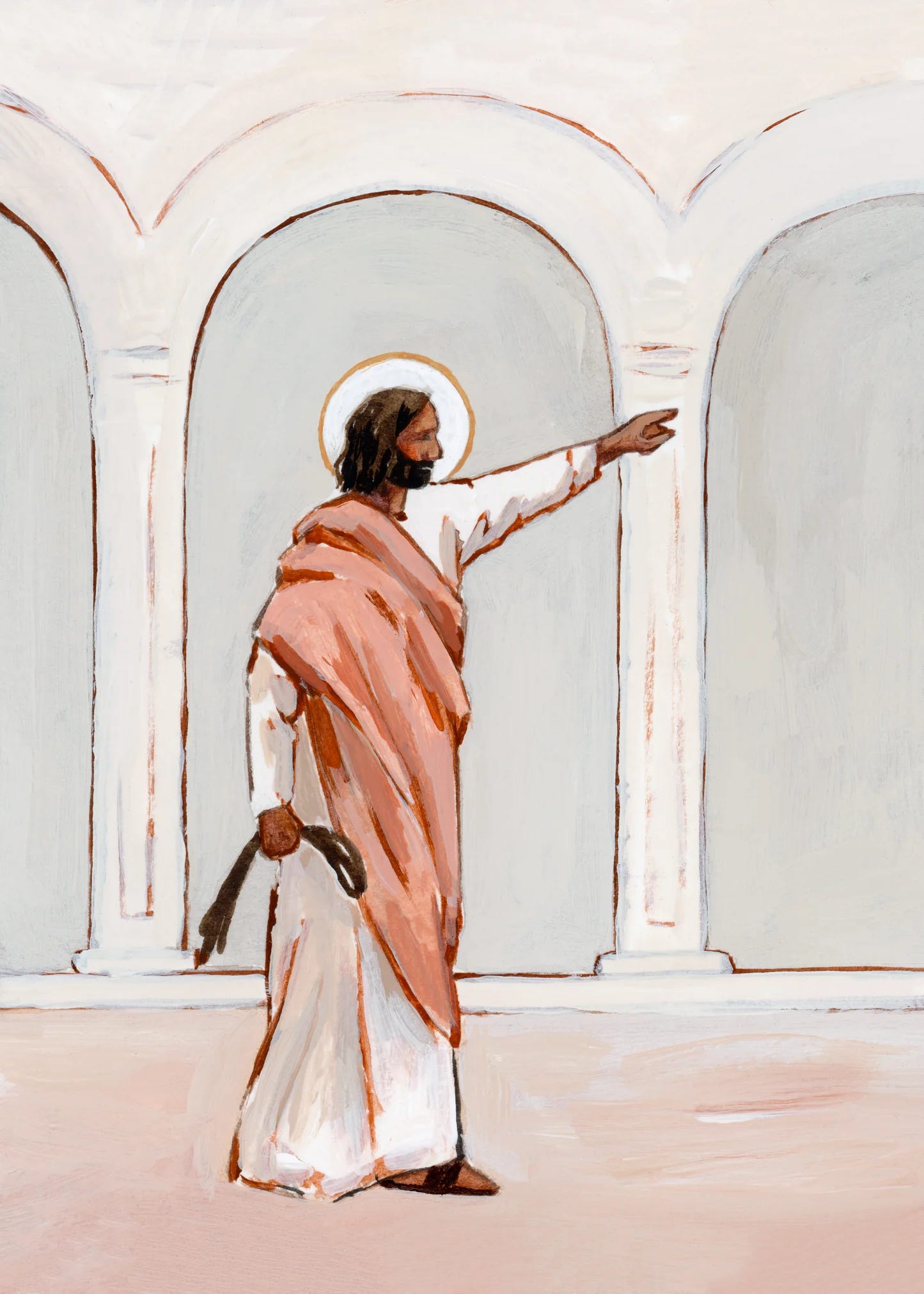
On Tuesday, we talk about the cleansing of the temple.
Jesus walked into the temple courts and found them full of money changers and merchants. They had turned God’s house into a marketplace, a den of thieves. And Jesus, the same Jesus who blessed children and healed the sick, made a whip and drove them out.
The sin of the money changers wasn’t that they were just handling money. It was that their love of money had driven them to use it to oppress and hurt other people. They loved money more than they loved God.
This is one of the hardest lessons to teach (and to live). Nothing in our lives can be more important than Jesus, not jobs, sports, success, or comfort, and especially not money, because money promises everything God promises: security, safety, happiness, purpose. It’s the most convincing counterfeit there is.
We talk with our kids about what it looks like when something becomes more important to us than God. We ask them what things they’re tempted to love too much. And we confess our own temptations, because this is a battle we’re still fighting too.
Thursday: Passover
This is the day we’ve built the most tradition around.
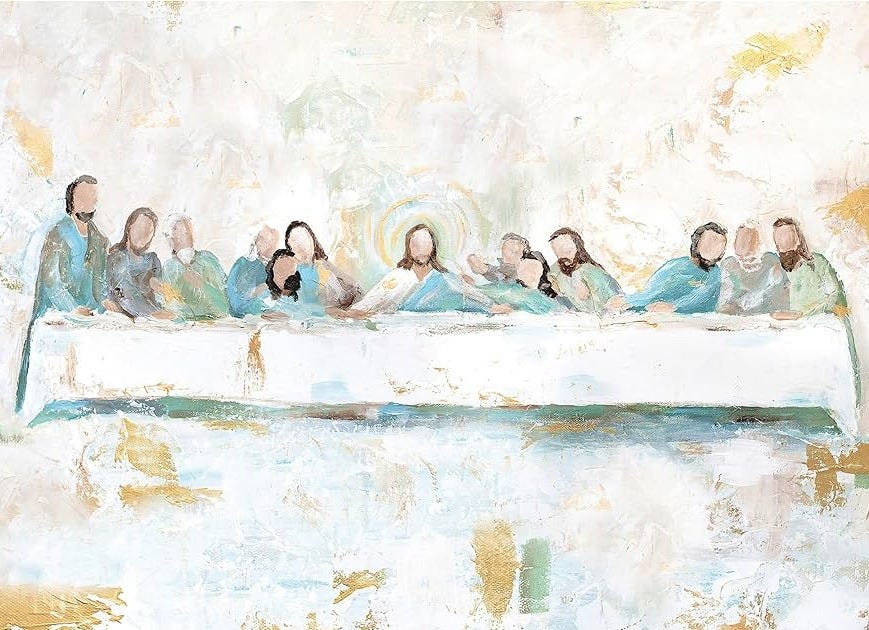
On the night before he was crucified, Jesus gathered his disciples for a Passover meal. He broke bread, poured wine, washed their feet, and told them to remember.
Passover was already an ancient tradition by then. For over a thousand years, the Israelites had been celebrating the night God delivered them from Egypt, passing over the homes marked with lamb’s blood and striking down the firstborn of their oppressors. God commanded them to remember it every year, forever. Not because they needed a holiday, but because they would need to remember. Generations later, when their children asked “What does this mean?”, they would have a story to tell.
We do the same thing.
On Passover evening, we gather as a family. We light candles. We read scriptures about the plagues and the deliverance, about the blood on the doorposts and the angel of death passing over. We talk about how the Israelites have continued to celebrate this meal for thousands of years because God told them to remember, and remembering kept their faith alive.
Then we connect it to Jesus. We talk about how Jesus is the true Passover lamb, the one whose blood marks us and saves us from death. We talk about how he chose to have his final meal with his disciples on this night, of all nights, because he wanted them to see the connection.
And then we read from our Passover Document.
(A guide to make your own is attached at the bottom of this article)
The Passover Document is our family’s written record of the moments when God showed up for us: the miscarriages he carried us through, the opportunities he provided when we had no backup plan, the seasons in our marriage that could have broken us but didn’t. We’ve written them down so we won’t forget. Every year, we sit together and read through them, sometimes adding a new story to the list.
This tradition is as good for me as it is for the kids. How easy is it to forget, when you’re facing a hard decision, that God has consistently shown up for you in the past? How easy is it to act like you’re on your own, forgetting the context of his providence and faithfulness? Just the practice of developing this document with my wife has been really helpful for my own faith. Sitting together, recounting the ways God has shown up, reminds me that he is worthy of my trust. Not in the abstract. In the details of our actual life.
As our kids grow, they’ll have their own stories, their own moments when God showed up. And they’ll add them to the record. Eventually, they’ll build their own Passover Documents for their own families. That’s the vision: faith that outlasts us because we taught them how to remember.
At the end of this article, I’ve attached a worksheet to help you build your own Passover tradition, including how to create your family’s Passover Document.
Good Friday
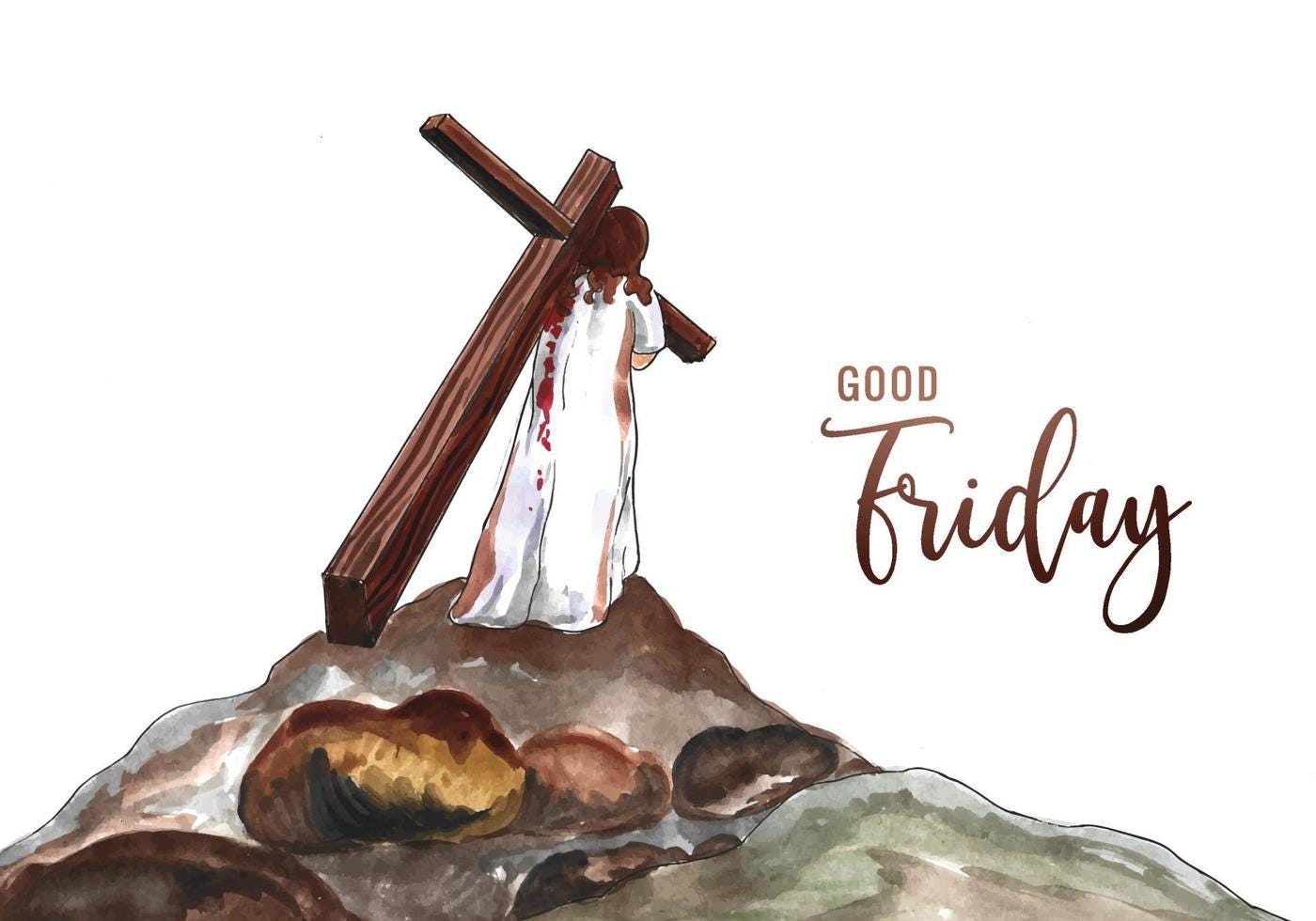
On Friday, we share the passion narrative.
We’re clear about what happened, but we keep it age appropriate for our kids. This might mean some of them go to bed before we start this reading. We walk through the betrayal and the trial, the beating and the nails, the crowd that shouted “Crucify him!” days after shouting “Hosanna!” We talk about why Jesus had to die, about sin and sacrifice, about the weight of what he carried.
Friday is heavy. It’s supposed to be. We sit in the grief of it, because you can’t really celebrate Sunday if you haven’t felt the weight of Friday.

Easter Sunday
And then we celebrate.
On Easter morning, we go to church as a family. We sing, we hear the story of the empty tomb, and we remember that death didn’t win, that the grave couldn’t hold him, that Jesus is alive.
This is the day that changes everything. Without the resurrection, there is no Christianity. There is no hope. There is no point to any of this. But because Jesus rose, everything we’ve been teaching our kids all week is true. The Passover lamb who was slain is now the risen King.
We celebrate with family. We eat together. We let the kids run around and hunt for eggs and enjoy the day. But they know why we’re celebrating. They’ve walked through the whole week with us. The joy of Easter lands differently when you’ve carried the weight of the days that came before.
Why This Matters
Holy Week gives us something most of the year doesn’t: a built-in structure for discipleship.
The week is already there, waiting to be filled with meaning. All we have to do is show up and be intentional about it.
If this feels overwhelming, trust me, the traditions compound. Each year, our kids understand a little more. Each year, the Passover Document gets a little longer. Each year, the rhythms feel more like home. More natural, less effort. Just stick with it.
You are giving your children a way to remember, year after year, for the rest of their lives. And when they have kids of their own, they’ll know how to pass it on.
That’s the goal. Faith that outlasts us. Scripture written on our children’s hearts.

About the Author:
Currently, I serve as the Executive Director of Them Before Us, advocating globally for the rights and well-being of children.
I am also the co-founder of All The Good, a leadership organization helping non-profits do all the good they are called to do.
I studied Cross-Cultural Ministry and Humanitarian and Disaster Leadership at Messiah and Wheaton. I read a lot and sleep less than I probably should.
My wife and I live in Charlotte, North Carolina with our 4 kids.