

Stop Apologizing for Missionaries.
A secular study suggests they may be the key to flourishing

I was a cross-cultural Christian ministry major in college, and I can remember one of the classes I took was called “Missionaries to Africa”. It detailed the lives of hundreds of missionaries who moved from Protestant Europe to evangelize somewhere on the continent of Africa. I was lucky in my timing, to go through a missions program and even a class like that during a time when the West was not yet in full retreat. Now, it was still a little contentious, you could definitely feel the eggshells under your feet anytime you discussed anything good the missionaries had done. There was an impulse to feel that you should not be too proud of any of it.
I am afraid it has only gotten worse since those days. And I’ll admit, I was not immune to it. Call it naiveté but I assumed the missionaries probably only converted a few people, the project was probably a little white saviorific, they probably overran the local culture, paid no attention to the customs, probably hurt people. All the while putting themselves in danger, dragging their families and kids across the world, many to die an early death. That was the narrative presented as settled fact, and I think I absorbed it the way you absorb most things when you are young, on faith and without much resistance.
What started to loosen my grip was a deep dive I have been on recently. Everybody who follows this Substack knows I am a big reader. A couple of Rodney Stark books, combined with Victor Davis Hanson’s Carnage and Culture, has had me immersed in everything from the Roman times through what many people call the Dark Ages. I’ll be honest, I had an embarrassingly large hole in my education and didn’t know much about any of it. But in one of those books there was a landmark study mentioned, by a man named Robert Woodberry, and the claim the authors reported left me dumbfounded, because it flew completely in the face of everything I had known to be true about missionary efforts across the world.
(You can find the full study linked at the bottom of this article)
What the Data actually showed
Woodberry spent more than a decade building a database of where Protestant missionaries went and tracking what those places actually look like now. His findings were published in 2012 in the American Political Science Review, one of the biggest journals in his field, and the article opens with a sentence that was completely new to me. It “demonstrates historically and statistically that conversionary Protestants (CPs) heavily influenced the rise and spread of stable democracy around the world. It argues that CPS were a crucial catalyst initiating the development and spread of religious liberty, mass education, mass printing, newspapers, voluntary organizations, and colonial reforms, thereby creating the conditions that made stable democracy more likely.”
Woodberry reports that the historic prevalence of Protestant missionaries “explains about half the variation in democracy” between Africa, Asia, Latin America and Oceania and “removes the impact of most variables that dominate current statistical research about democracy.” For those of you who are not statistics nerds, that is massively significant. When Woodberry described it to Christianity Today, he said, “It was like an atomic bomb. The impact of missions on global democracy was huge. I kept adding variables to the model—factors that people had been studying and writing about for the past 40 years—and they all got wiped out.”
But most of us, I suspect, care less about the form of government than about how that form of government effects the everyday lives of the people living there. Andrea Palpant Dilley lays that out in Christianity Today:
“Areas where Protestant missionaries had a significant presence in the past are on average more economically developed today, with comparatively better health, lower infant mortality, lower corruption, greater literacy, higher educational attainment (especially for women), and more robust membership in nongovernmental associations.”
Take a second and look at what is on that list: More prosperous lives. Healthier people. Fewer children dying in the arms of their mother. Less corruption from officials who steal right from the poor. People who can actually read. Girls who stay in school. The kind of associations that build trust in a society and let prosperity continue. You are looking at nearly every crucial factor for what we would consider a healthy society, all of it predicted by missionary presence, a legacy of the church.
One example of the missionary’s impact is found in their motivation for literacy. Woodberry’s conversionary Protestants believed, as a matter of doctrine, that every person needed to read the Bible in their own language. So everywhere they went, they taught people to read. As Boston University’s Dana Robert put it in that same article, “if you look worldwide at poverty, literacy is the main thing that helps you rise out of poverty. Unless you have broad-based literacy, you can’t have democratic movements.” They printed in the vernacular. They built schools for women and the poor that no one else had any interest in building. Pull out a map, Dilley writes, summarizing Woodberry, and anywhere conversionary Protestants were active in the past you will typically find more printed books and more schools per capita. And honestly, that was just the beginning. Literacy, trust, hospitals, elder care, care for the unborn, all of it strengthened.
And here is the deal breaker: the variable that predicted flourishing was not whether a country was colonized or spared. It was whether conversionary missionaries had been there. Where they went, generations later, the people were better off, better educated, healthier, freer, more prosperous. That is the finding that flew in the face of everything I had learned.
The Faces behind the Figures
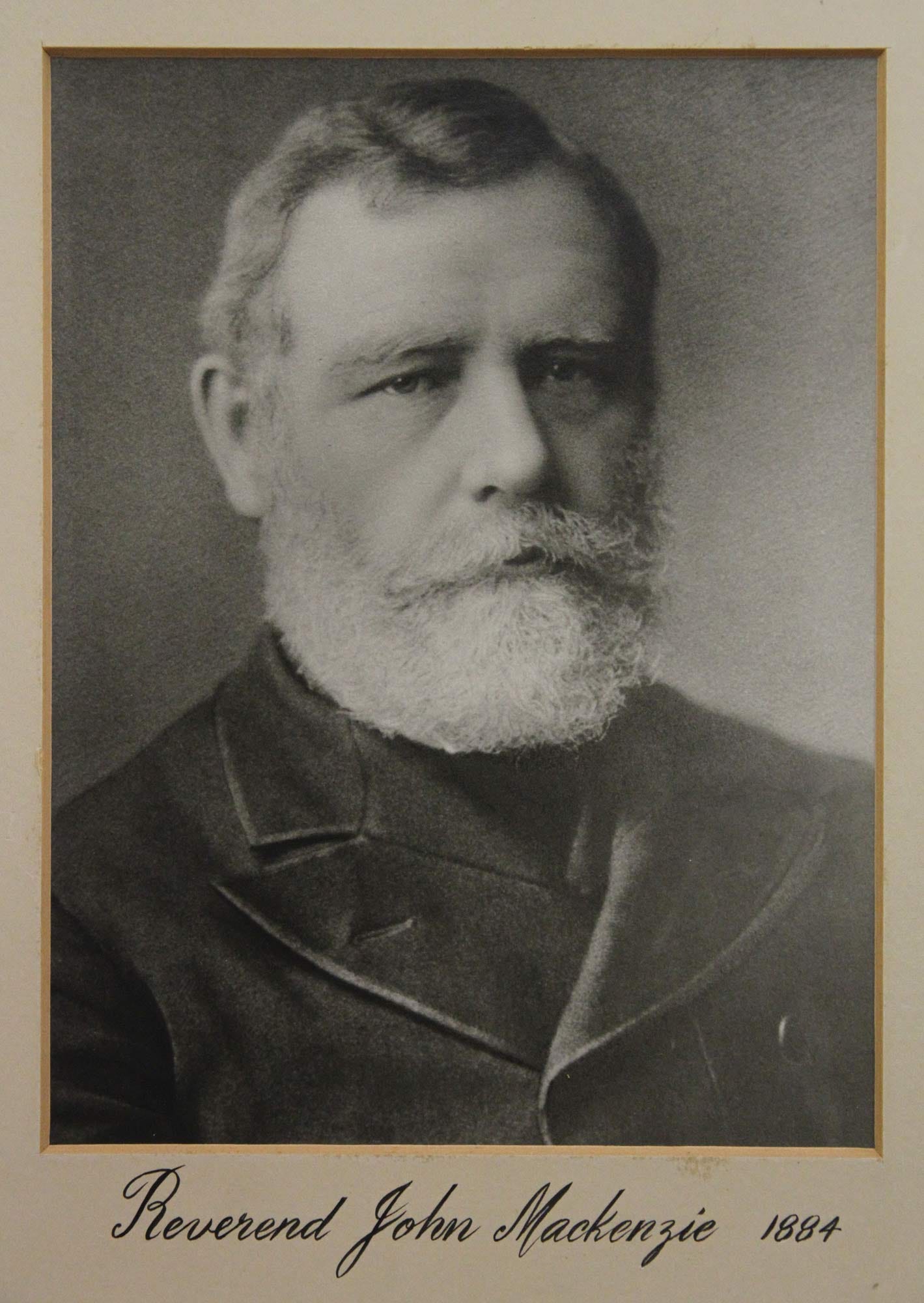
If you zoom in on those numbers you start to hear the stories underneath them, the truly heroic ones, the men and women whose obedience made these miracles possible. I am drawing the following from Andrea Palpant Dilley’s reporting in Christianity Today, and I will paraphrase her at length here. There was John Mackenzie, who spent three decades trying to keep African land out of the hands of white settlers. When settlers threatened to seize his friend Chief Khama III’s territory, Mackenzie helped Khama travel to Britain, held petition drives, translated at political rallies, and arranged a meeting with Queen Victoria. Their efforts convinced Britain to enact a land protection agreement, and without it, as Dilley puts it, the nation of Botswana would likely not exist today.
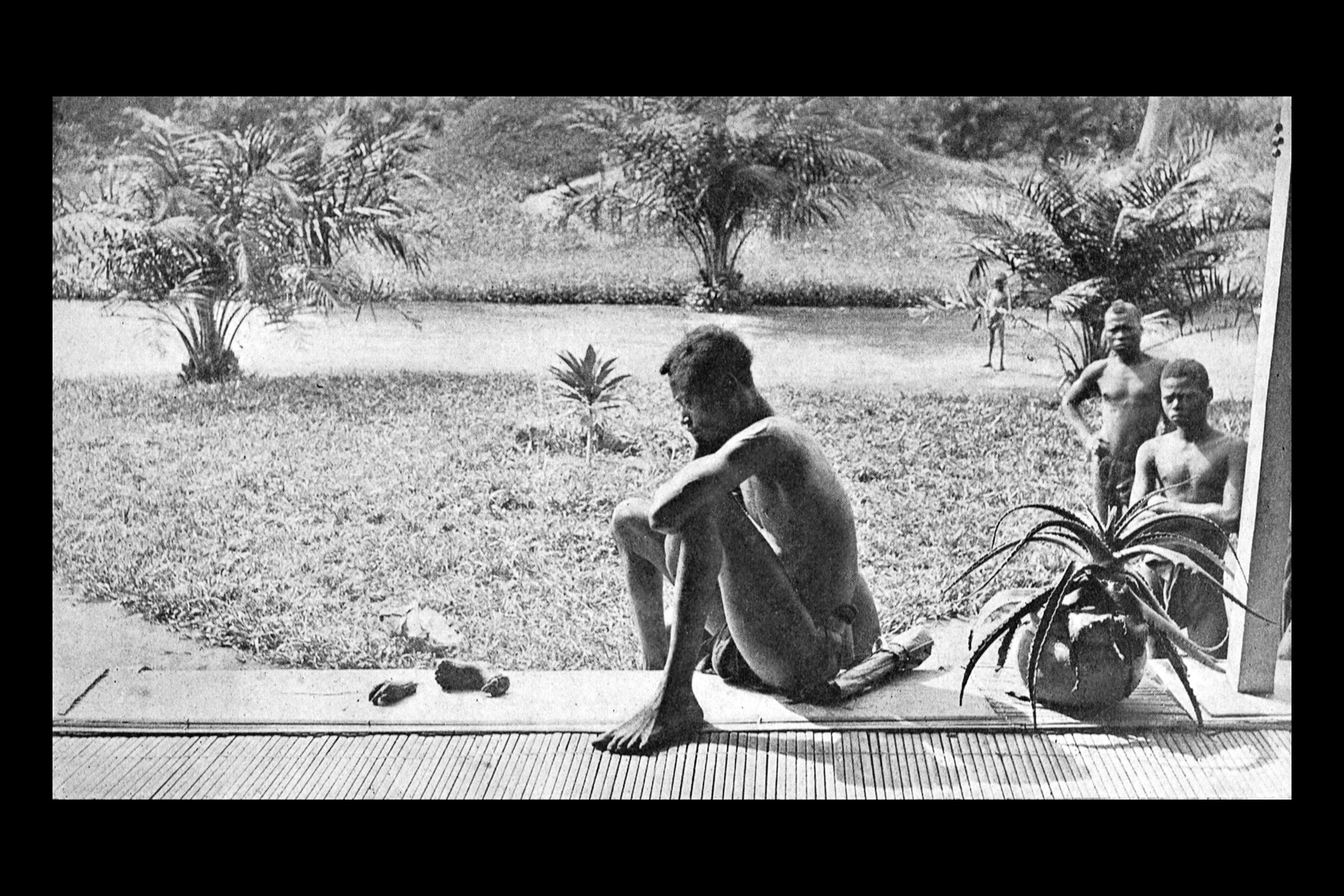
There were John and Alice Harris in the Congo in the early 1900s. Colonial overseers were extracting rubber through forced labor, and villagers who resisted were castrated, burned, or had their limbs cut off. The Harrises, two British Baptist missionaries, photographed these atrocities at great risk to their own lives, including a now-famous image of a father staring at the severed remains of his small daughter. They smuggled the photographs out of the country and carried them through the United States and Britain until the world could no longer look away. The atrocities were monstrous and they were real, and the thing that decided whether the world ever knew about them was the presence of these missionaries. Take the French Congo, where Protestant missionaries were not allowed. The same kind of horrors unfolded, and they were met with silence. In the Belgian Congo, where the missionaries were, those same abuses ignited what Woodberry’s research describes as the largest international protest movement since the abolition of slavery. The same colonial cruelty in both places. The missionaries were the difference between an atrocity that got buried and one that was put in front of the world to be confronted.
Now, before you attack me, before you fill my inbox with articles and replies and comments about how evil colonization was, let me save us both the trouble. I know it was evil. We all know it was evil. We all regret much of that period. The problem is not that we know it. The problem is that the knowledge is now being weaponized against us, picked up by people with their own ends and turned into a bludgeon. We have spent too long of a season in a posture of self-flagellation, expected by the entire world to be embarrassed and to stand forever with our tails between our legs apologizing for everything we have ever done. But I am encouraged that the season is changing, and a study like Woodberry’s is a good counterfactual for us to wrestle with. We do have much to be embarrassed about. But the apology has to be checked by a fact we have somehow let ourselves forget.
Evil is not the anomaly. Evil is the ordinary.
Take slavery, the great trump card against religion and against the United States more broadly. Slavery, if I need to remind you, has existed on every continent and in nearly every society that ever organized itself. Mauritania did not abolish it until 1981, the last country on earth to do so. Even the transatlantic trade we treat as the West’s singular sin was not possible on its own. Europeans could not get into the interior of Africa to capture slaves; malaria would have killed them before they got far enough to do the work. The trade was made possible only by a network of slave markets that already existed, supplied by polities that had been enslaving captives long before any European ship showed up on the shore. That is not an excuse. None of that lessens the horror of what the West then did, or how it scaled that horror to an industrial pitch. But it does dismantle the idea that bondage was a Western invention loosed on an innocent, happy world. Evil is the ordinary condition, and we cannot expect ourselves or our society to be any different. We are no different.
If evil is the ordinary, the cynic’s whole method falls apart, because the standard he is using convicts everyone. Hold the West to it and you get a monster. Hold any other people who ever lived to that same standard and you get a monster too, because the wrongs are always there to find. So the only thing that actually demands explaining is not the evil. The evil is the baseline. What demands explaining is the anomaly, the appearance of people who looked at an ancient and universal cruelty and decided it had to end. Britain and the young United States were two nations that chose to abolish slavery at great cost to themselves, Britain spending an enormous share of its naval budget for decades to suppress the trade at sea, the United States spending a staggering amount of blood and treasure, ripping its own union apart to end it. The abolitionist is the strange one. The cruelty was always there. The revolt against it was the surprise.
The Crookeds and the Straights
While I was working all of this out, a movie kept surfacing in my memory. It was Fences, the 2016 film Denzel Washington directed and starred in, adapted from August Wilson’s Pulitzer Prize-winning play. Washington plays Troy Maxson, and Troy is honestly very difficult to watch on screen. He betrays his wife. He crushes his son’s future out of his own old bitterness, and by most measures he is the bad guy, and the film does not flinch from any of it. It is the kind of movie that leaves you unsettled, with a pit in your stomach, because the characters are so complex. When you know a man is the bad guy and you are not rooting for him, it is easy to discard him by the time the credits roll. But what do you do when the bad guy also does some good? What do you do when the bad guy is complicated by the things that were done to him first, when he is also a victim?
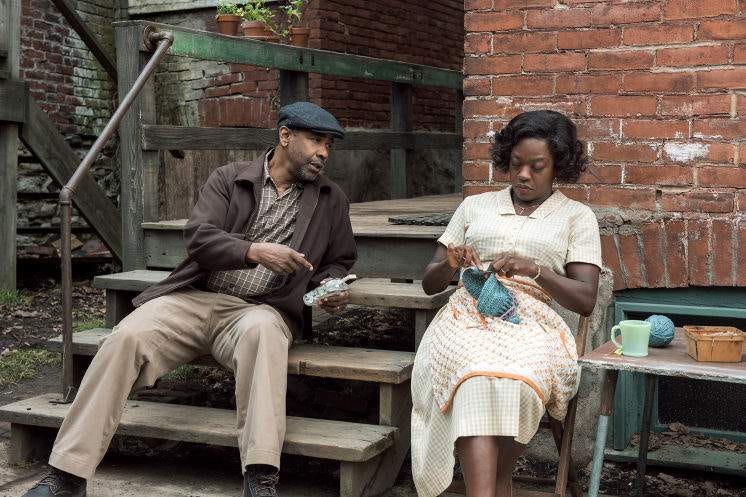
There is a famous line that runs through the story and gives the play its moral spine. “You’ve got to take the crookeds with the straights”. It was Troy’s saying, handed down from his own father, and at the end it falls to Troy’s grown son to repeat it at the graveside, remembering a man he had every reason to dismiss and every reason to condemn. Yet he keeps clinging to that line. That is the part that stayed with me, and it convicted me. It is so easy to flatten a man like Troy into his worst chapters and be done with him. Instead the line asks you to hold two things at once, the crookeds and the straights, and to admit that a person is more complicated than the indictment allows.
I think that is the discipline we have lost in our political conversation, and not only about the West. We want our decisions simple, our parties simple, our countries simple. It is either, America the Racist or Make America Great Again. We want the off-ramp, the clean exit. But people are more complicated than that. We are frustrated by the things they have done and by the things that have been done to them. The honest memory of almost anyone will be a flawed one. They make huge mistakes, and then they do something confusingly good, and that goodness contradicts everything and refuses to let us file them away in one category or the other. Learning to live with that complication is an art lost by many today.
Many from the West, have done horrific things. We have been a people capable of real and deliberate evil. But I want you to pause before taking, the off-ramp of pure guilt or of pure pride and delusion. Stay in the tension instead. We have also produced more of the other kind of person than almost anyone on earth. An innumerable number who walked into dark places on purpose to redeem it. Our collective foundation, a fusion of classical virtues Greece and Judeo-Christian convictions like every person bearing the image of God, built some of the freest governments, the most productive economies, and lifted more human beings out of poverty than the world had ever seen. All of it can be true at once. Maturity does not let you erase one half to keep the other.
And as I reflect on Woodberry’s study one final time, it strikes me that the reason it cut through the noise is that cold, hard data does not arrive laden with the politics of our moment. Opinion is often muted and weighed down with everything we know and everything we fear about how we will sound if we say it out loud. Opinion has to worry about how it will be received. Data carries no such concern. It speaks plainly about what happened when a particular conviction was set loose in a place, a conviction that the poor mattered, that everyone deserved the Scriptures in their own tongue, that there was a dignity in the untouchable and the infant and the elderly that no caste or king could revoke. Turn that conviction loose in a country, even through a relatively small number of people, and the result is transformative generations later.
So this was never really an argument about the West. The West was only the case in front of me, the one I had been trained to see only crookedly. What I am actually trying to learn is how to look at anything made by human beings without lying, the civilization and the father and the neighbor and the face in the mirror, all of them crooked and straight at once. Scripture never pretended otherwise. It gave us David the psalmist who arranged a murder, Peter the rock who swore he never knew the Lord, Paul who held the coats while they stoned Stephen. The Bible is relentless because it knows we all have fallen short and yet not beyond redemption.
We are not defined by our worst characters or our darkest decisions, and neither is anyone else. We will be remembered, and we should want to be remembered, by those rarer hours when we transcended what we are, and by the help of the Holy Spirit did some great and costly good to bring a little of God’s kingdom to earth.

ABOUT THE AUTHOR:
Currently, I serve as the Executive Director of Them Before Us, advocating globally for the rights and well-being of children.
I am also the co-founder of All The Good, a leadership organization helping non-profits do all the good they are called to do.
I studied Cross-Cultural Ministry and Humanitarian and Disaster Leadership at Messiah and Wheaton. I read a lot and sleep less than I probably should.
My wife and I live in Charlotte, North Carolina with our 4 kids.
