


I was reading Carl Trueman’s book on creeds and confessions, Crisis of Confidence, the other day, and he was describing how digital nativism has warped our minds. Typically, older people knew how to do more things than younger people. But watching the child work the iPad while grandpa struggles to turn it on creates a cultural disconnect, where the child is the genius and grandpa’s the idiot.
The connection to the creeds, said over and over again in church, is pretty clear. There’s a submission and a humility that comes with them: an understanding that some things shouldn’t be innovated, some things shouldn’t be progressed. The creed doesn’t need a software update. It was decided by people who couldn’t work an iPad, centuries, maybe millennia, before you, people who had a better grasp on this truth than you do, and maybe it can’t be improved upon. I see in that an appreciation for the sacred, an appreciation for the old.
But in our disposable and disconnected world, where we believe anything new is good and anything old is bad, we have so little appreciation for the wisdom of anything ancient.
What we’ve lost
We’ve lost our appreciation for ritual. Right off the bat, you’re probably thinking that sounds “cult-ish.”
But bear with me. Rituals include rites of passage, holidays and traditions, and creeds: the stories and narratives we recite. They are the transformational events, relationships, and words that shape our worldview and our outlook, and in losing them, we’ve lost our appreciation for the sacred.
All of the data point to a world, a future, that has lost them.
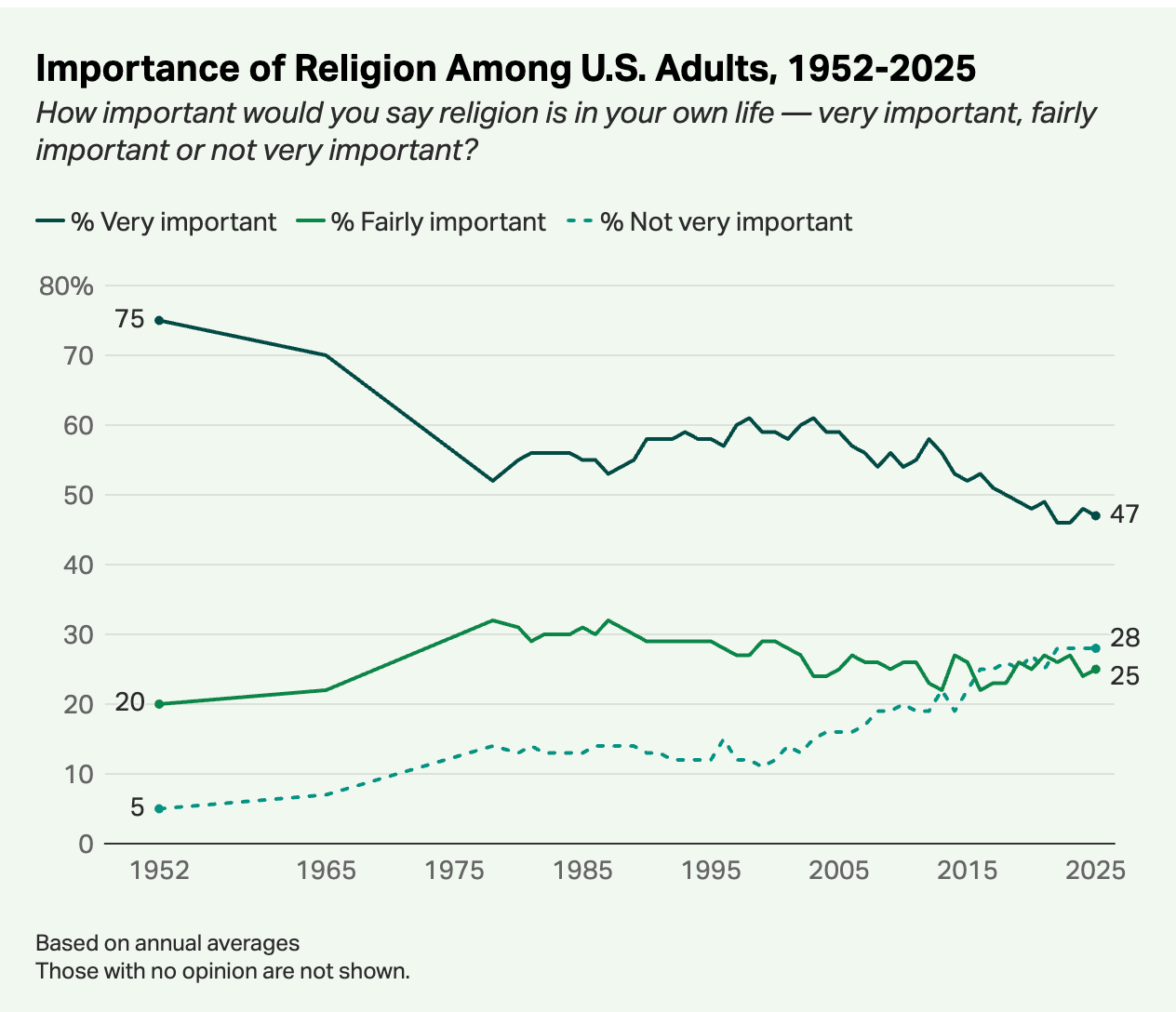
Church: weekly or nearly weekly attendance at religious services fell from 44% of Americans in 1992 to 31% in 2025. Among young adults it is 25% (Gallup).
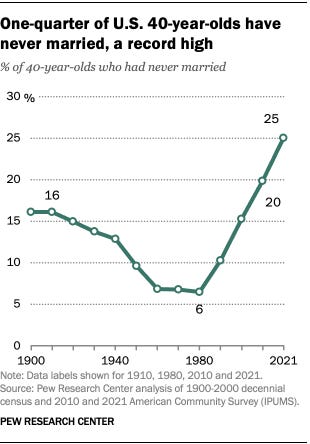
Weddings: as of 2021, a quarter of American 40-year-olds had never married, up from 6% in 1980 (Pew).
Births: in 2024, 52% of American women aged 20 to 39 had not yet given birth, up 45% since 2006 (UNH Carsey School).

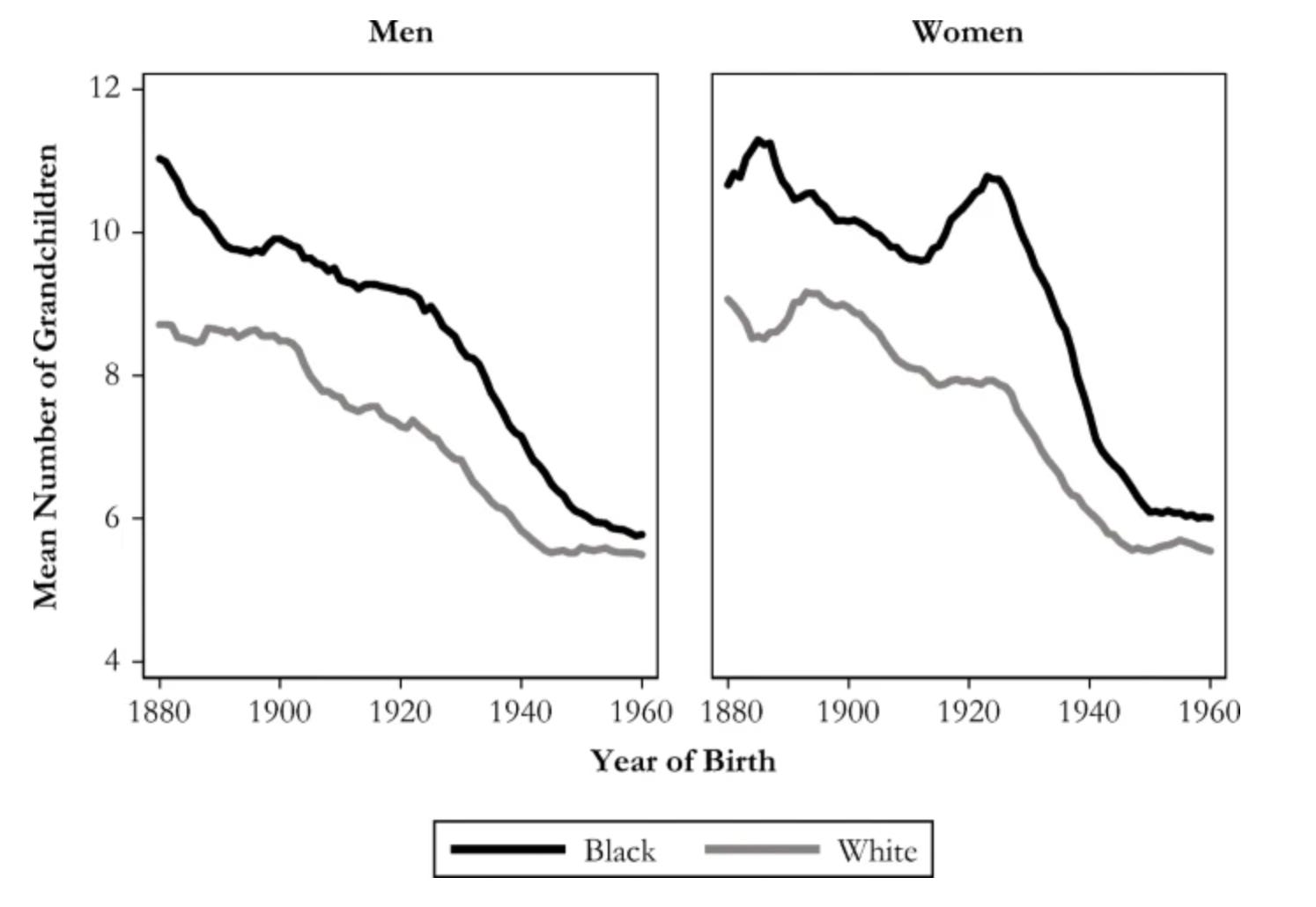
Grandchildren: an estimated 25% to 30% of Americans born in 1960 will never become grandparents (Margolis and Verdery, Demography).
What they teach
All of these rituals and rites of passage teach a worldview and a set of values so drastically different from the culture we live in each and every day.
The funeral
Not all children are ready for funerals, but as they can handle it, we should not shy away from bringing them. They need the confrontation of mortality that comes with it, and the realization that comes with the eulogy and the testifying that so many do as they highlight values of the deceased that aren’t often celebrated in the normal humdrum of life. It wasn’t money, fame, or status, but a set of eternal principles: love and sacrifice. What kind of friend you were. What kind of dad you were.
At a funeral, you enter an alternate reality where the economy that governs our everyday life, the currency that makes you important, suddenly no longer matters. The job you prized for so long has posted your vacant position on the website. And you, who had status and influence because you chose to invest in the wrong things, may have a hollowed-out funeral. Those are things people notice.
On the flip side, the kindergarten teacher, seemingly “unimportant” in life, who spent her time with people and friends and never had the new car or the nice house, suddenly can’t find a venue big enough to fit the number of people who want to come stand and testify to the impact she made on their lives.
It turns out there has been a parallel economy running all this time. Funerals pierce the veil of our artificial reality, to speak to an eternal truth.